Mapping Control Monitoring Coverage to SOC 2 Trust Service Criteria
Strong controls lose audits when monitoring evidence doesn't map to the criteria.
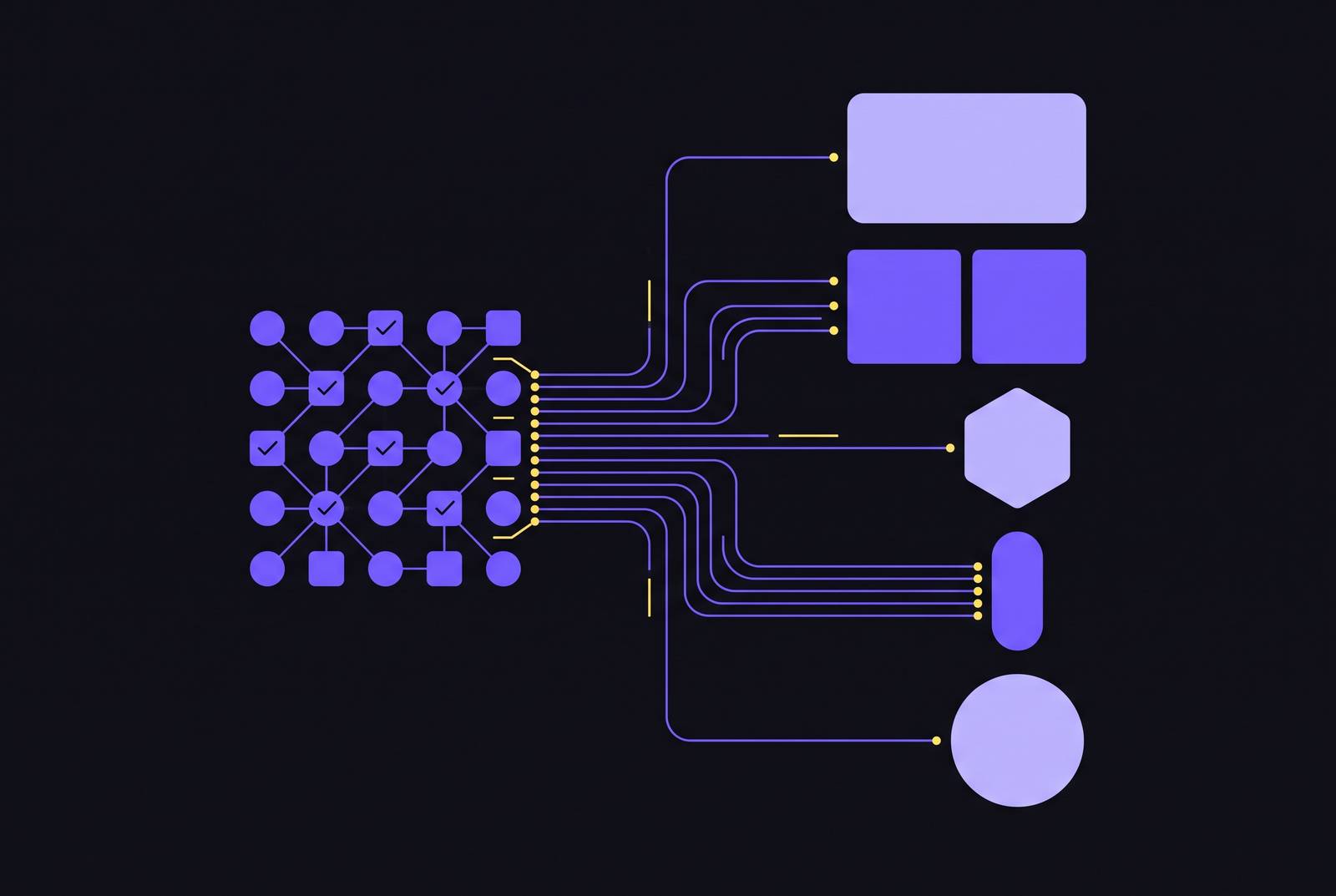
SOC 2 audits fail more due to paperwork than actual security. A company might have all its access controls, encryption policies, and incident response plans functioning properly, yet still face a massive coverage gap in a Type 2 audit because it didn't match each control to the relevant Trust Service Criteria. This article covers that mapping issue: what the AICPA's Trust Service Criteria really require for monitoring, why CC4 is key to most failures, and how to create a coverage map that handles Security, Availability, Processing Integrity, Confidentiality, and Privacy as five distinct tasks, not one checklist.
The Trust Service Criteria originate from the COSO Internal Control, Integrated Framework, which has been used in financial audits since the 1990s. COSO's framework for internal control includes multiple components, among them Control Environment, Risk Assessment, Control Activities, Information and Communication, and Monitoring Activities. Each of SOC 2's five Trust Service categories (Security, Availability, Processing Integrity, Confidentiality, and Privacy) applies those five components in its own way. They usually overlook this bit. It's not a universal security checklist simply adding items for Privacy or Availability. Each category has its own control environment, risk assessment, and monitoring, with its own evidence.
Only Security is mandatory; the other four categories depend on a company's customer commitments and risk profile. The Common Criteria for Security (CC1 to CC9) include 33 separate requirements by themselves. Add the extra categories, and the total goes up: Availability has 3 more, Confidentiality 2, Processing Integrity 5, and Privacy 18. The framework came out in 2017 and got a 2022 update with new focus points, so it’s not a sudden change that surprises auditors. This rulebook’s been around long enough, and most misses come from the companies themselves.
Also keep in mind: SOC 2 is an attestation engagement, not a checklist review. Auditors judge if controls were set up right and worked as planned the whole time, not just if some policy binder sits on a drive. This whole piece depends on the difference between attestation and checklist. When you layer COSO's five-part framework, category-specific criteria, and full-period evaluation, coverage gaps appear right where you'd predict: at the boundaries between categories, and between governance documents and the technical controls designed to support them.
What Security's 9 Common Criteria actually require from a monitoring perspective
Grouping the nine Common Criteria series into two makes things much clearer. CC1, CC2, CC3, and CC9 focus on governance: control setup, communication, risk evaluation, and vendor risk reduction. CC1's 5 criteria (CC1.1 through CC1.5) address board oversight, ethics, and accountability structure. CC2's three criteria focus on how security information is shared both internally and externally. CC3 deals with spotting and evaluating risks in four areas. CC9 addresses 2 criteria related to mitigating vendor and third-party risk. Most proof for this group comes from policy documents, board minutes, and risk registers. You won’t find proof of the board discussing last quarter’s security posture in any system logs.
Auditors focus on CC4 to CC8, where the audit process gets most challenging. CC4 is Monitoring Activities, 2 criteria, and it gets its own section below because it's the criterion that ties everything else together. CC5 includes 3 criteria for Control Activities. CC6 has the most rules, eight (CC6.1 to CC6.8), on who can get in, how, and what happens to data. CC7 covers System Operations across 5 criteria and is the source of the operational logs that ongoing monitoring depends on. CC8 consists of one criterion about Change Management, which needs proof for each system change during the audit period.
Many teams stumble when creating their first coverage map because controls and criteria don’t match one-to-one, they’re many-to-many. One control might meet multiple criteria simultaneously. One criterion could require many controls combined to be fully met. Two companies can build entirely different control sets and both pass the same criterion cleanly, because SOC 2 evaluates outcomes and design, not a prescribed technical recipe. This flexibility is a true advantage. Gaps hide right here, because teams think a control built for one purpose automatically covers a criterion when they've never documented the link. Assuming isn’t proof. Auditors spot the difference, whether the compliance team likes it or not.
Each of the criteria across the five categories needs its own evidence trail sustained across the full observation period, not a single point-in-time snapshot. CC6 stands out because its 8 criteria don't share evidence as people might wish. Each of those, provisioning, deprovisioning, authentication, segmentation, physical access, and data disposal, requires its own ongoing record. A single access control list screenshot isn't enough to satisfy six different criteria, no matter how detailed it looks.
CC4 as the criterion that makes or breaks monitoring coverage claims
CC4, Monitoring Activities, lists just 2 criteria, CC4.1 and CC4.2, so it seems small compared to CC6's eight. It's not insignificant. This criterion decides if the proof from all other controls is valid.
CC4.1 mandates two separate types of evaluation, and mixing them up could lead to audit findings. Daily checks run as part of normal work, live or almost-live tests that the control’s there and working, not some every-three-months scramble. Internal audits, penetration tests, and independent certifications are separate, periodic, objective evaluations. SOC 2 lists penetration tests as an accepted separate evaluation, and how often you run them, and what they cover, must match your risk and how quickly your setup shifts. A company shipping code daily needs tighter separate-evaluation cadence than one running a mostly static back-office system. Ongoing monitoring by itself doesn’t meet the separate evaluation rule, and a yearly audit doesn’t meet the ongoing rule either. Auditors need to see both types, with clear differences between the two.
CC4.2 covers deficiency communication. A control's failure must promptly reach the responsible parties, senior management, and the board, as needed. Spotting the issue doesn’t wrap it up. Management must monitor if the deficiency is resolved within the agreed timeframe. Under CC4.2, an open finding in a spreadsheet without a remediation date is effectively another audit finding. This can lead to audit findings if the deficiency remains unresolved.
During fieldwork, auditors examine monitoring dashboards, alert configuration records, and internal audit reports. Auditors look for evidence the company constantly monitors controls and updates evaluations when risks change, not merely a dashboard with a green tick. Evidence that holds up under scrutiny typically includes timestamps, system exports, explicit control mappings, clear ownership, and secure retention.
CC4 presents a structural issue that's nearly architectural. It requires evidence of monitoring across every other criterion in the framework, which makes it the meta-criterion of the whole exercise. A missing part in CC6's deprovisioning proof isn’t only a CC6 issue now. It's also a CC4 problem; CC4.1 checks if the organization monitors controls continuously, and a silent CC6 gap says no.
How coverage obligations differ across the four supplemental categories
Including an extra category in SOC 2 isn't just about ticking a box on the contract. It adds a distinct evidence requirement throughout the entire audit, on top of what's already being gathered for Security.
Availability (3 criteria, A1.1 through A1.3) includes capacity planning, performance monitoring, and backup/disaster recovery. Proof isn't just a backup policy, it's live uptime stats, incident logs, and test restores. This category is most critical for SaaS platforms with SLA commitments, cloud infrastructure providers, and continuous delivery teams where downtime costs money.
Processing Integrity (5 criteria, PI1.1 through PI1.5) covers input validation, processing accuracy, and output completeness and timeliness. Proof comes from processing logs, error-handling files, and transaction accuracy checks. It's important to note that a system can meet Processing Integrity standards even if it processes incorrect source data. The standard checks if the system handles data right and fully, not if the original data was correct. Financial transaction processors and e-commerce platforms live and die by this category, and it's easy to conflate "the system worked" with "the outcome was correct." They're not the same claim.
Confidentiality (2 criteria, C1.1 and C1.2) covers data classification, access restrictions on confidential information, encryption, and secure disposal. Here's where much confusion starts, since Confidentiality and Privacy sound like synonyms but aren't. Confidentiality covers sensitive non-personal information: trade secrets, intellectual property, legal documents. Privacy deals with personal data and is controlled by the AICPA's Generally Accepted Privacy Principles and, in practice, by rules like GDPR and CCPA. A company might excel at Confidentiality but still fail at Privacy, as the required evidence for each doesn't align despite their similar-sounding names.
Privacy, with 18 supplemental criteria, is the largest category, addressing notice, consent, data limits, rights management, third-party duties, and incident response. The proof includes records of consent, privacy impact assessments, and documentation showing individual access and correction requests were resolved within policy timeframes. Organizations that collect, store, use, or dispose of personal data need to watch this category, especially consumer-facing companies and health tech.
Picking these extra groups isn’t just a box-ticking call in some meeting. It’s a promise to cover everything. Including Privacy in the scope commits you to all 18 monitoring and evidence requirements for its criteria throughout the audit, regardless of whether the team was aware of this upfront.
Where coverage gaps actually appear and why they persist
Most SOC 2 failures aren't missing controls. They lack evidence that the control operated nonstop. That difference seems minor until an audit begins and it turns out the access log only covers the two weeks before the auditor’s fieldwork started. Auditors instantly identify that pattern from frequent experience, labeling it for what it is: point-in-time compliance theater, dressed up to look like continuous coverage.
This gap usually shows up when moving from Type 1 to Type 2. Type 1 checks if controls are set up right at one specific time. Type 2 checks if those controls worked properly over the entire period, usually six or twelve months. Manual reviews might pass Type 1 easily but fail Type 2, as CC4.1 requires proof of continuous operation, which quarterly spreadsheet checks can't provide.
There's also a difference between reported compliance and actual implementation. Programs often say they’ve widely implemented controls like MFA, but the actual deployment on devices falls well short. MFA is almost universally required by security frameworks, yet adoption among enterprise users remains limited. That's not a rounding error. It's a huge gap between written policy and the login screen employees face, showing just how much documentation and actual enforcement diverge as things get bigger.
CC6.2, about access revocation, often fails for a very simple reason. Auditors require evidence that access is promptly revoked from SSO, third-party tools, secrets stores, and cloud consoles after termination. Annual access recertification falls far short of meeting that requirement. It leaves gaps between reviews unrecorded, and an auditor only needs to ask one tough question to find a former employee’s active Okta session lasting four months.
For organizations using AI in 2026, CC9.2 presents a fresh challenge. Auditors now check if CC9.2’s risk controls track how models change, drift, retraining schedules, and reliance on outside LLM services, not just the vendor’s cloud setup. Teams that did a vendor risk assessment just once at onboarding and never checked it again will probably discover this gap during an audit.
Each control needs a named owner for this to work. Without a designated owner, a control fails unnoticed, as no evidence is gathered during the observation period when no one is tasked with ensuring its operation. If you find a control without an owner three weeks before the audit, you're six months behind.
The case for fixing these gaps quickly is about real money. According to the Ponemon Institute, the total expenses from business disruption, productivity loss, revenue decline, and regulatory fines are 2.71 times greater than initial compliance costs. Fixing problems costs more than following the rules. The numbers stay the same, even when gathering evidence feels tedious.
Building a coverage map that treats each TSC category as its own evidence domain
For each criterion, a coverage map must include four elements: a documented control, a named owner, an evidence source, and an operating frequency. If you miss any of those four, the map becomes a list of controls with no verified link to the criteria they should meet, a flaw auditors are trained to identify.
Security has to be mapped separately from each supplemental category it's paired with. All SOC 2 reports share the Common Criteria (CC1 through CC9) as their base. But Availability, Processing Integrity, Confidentiality, and Privacy each need extra evidence beyond that base layer. You can't satisfy any of them just by referencing Security evidence.
Each category must treat governance and technical controls as distinct evidence streams, since they age differently. CC1, CC2, CC3, and CC9 generate policy papers, board meeting notes, and risk registers that are periodic and document-based. CC4 to CC8 generate system logs, alert exports, and access reviews, all continuously and automatically. Gaps typically emerge in a predictable way: governance documentation appears thorough, with polished policies and approved risk registers, yet technical evidence often fades midway through the monitoring period. A map splitting these two evidence types reveals that silent drop-off early, before an auditor spots it.
Any coverage map should prioritize CC6 and CC7 due to their volume. Each of CC6’s eight rules demands its own proof, because an auditor won’t accept one big log for provisioning, deprovisioning, authentication, segmentation, physical access, and data disposal. CC7's system operations logs are just as crucial, as they directly support CC4.1's ongoing monitoring requirement, meaning that building strong CC7 evidence is essentially building half of CC4's foundation.
The map must clearly show the difference between Confidentiality and Privacy instead of assuming it, since the two evidence sets seem alike but are not interchangeable. Confidentiality evidence includes data classification records, disposal certificates, and logs of access limits for sensitive non-PII data. Privacy evidence includes consent records, DSAR handling logs, and privacy impact assessments, a distinct set even when the underlying data overlaps the two categories.
For each criterion on the map, two questions determine if coverage is genuine: where’s the evidence, and what shows it ran the whole time, not just sits in a folder?
Operationalizing continuous monitoring so CC4 evidence accumulates without manual intervention
A clear, yet tough-to-achieve implication of CC4.1's ongoing-evaluation standard is that monitoring must be integrated into daily operations, not a compliance push just before an auditor comes. CC4.1 wants proof like instant alerts, live-updating dashboards, and logs that roll in as they happen. Internal audits, penetration tests, and separate evaluations still matter, are still scheduled separately, but complement this continuous layer. They don’t take the place of it, and relying on one annual pentest for CC4.1 is as wrong as using CC1’s board minutes for CC7’s system logs.
Audit-grade continuous monitoring produces a specific kind of evidence, and it's worth being precise about what that looks like rather than gesturing at "good documentation." Timestamped system exports, pulled directly from the tool that generated the activity, carry weight in a way a screenshot taken on demand never will, because a screenshot proves someone remembered to take it that day and nothing about the days before. Alert settings are equally important, proving thresholds stayed consistent during the whole observation time and weren't changed just before the audit.
Building that evidence trail isn’t about clever hacks, it’s about accepting that continuous monitoring must run daily throughout the audit window, without relying on someone to remember to start it. Those holes we’ve looked at, CC6.2, CC9.2, the shift from Type 1 to Type 2, all come down to one thing: proof that was there, then just faded out. Coverage maps are there to spot when monitoring stops, before an auditor notices.