How continuous control monitoring catches SOC 2 control drift between audits
Detect compliance gaps before auditors do with continuous monitoring.
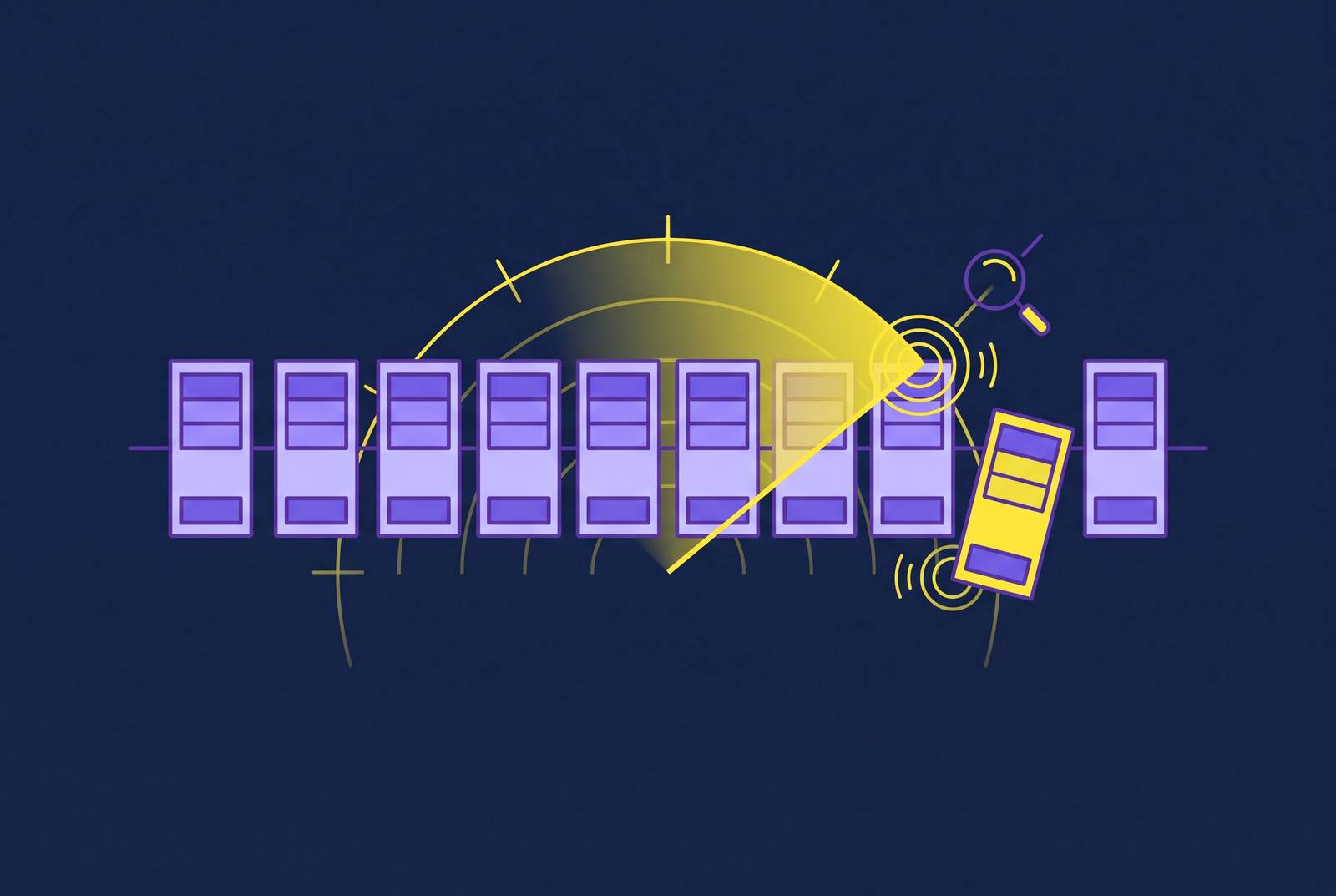
SOC 2 compliance has a timing problem. You pass your audit, get your report, and then spend the next eleven or twelve months doing whatever you were doing before. The auditor shows up again, samples a handful of evidence artifacts, and as long as those snapshots look clean, you pass again. The process rewards the appearance of control at two specific moments in time, not the reality of control across the full year. That gap is where organizations quietly drift out of compliance, often without realizing it until something breaks.
Continuous control monitoring, CCM, is the practice of closing that gap programmatically. Instead of assembling evidence in the weeks before an audit, you instrument your environment to assess control effectiveness on an ongoing basis. The difference is not cosmetic. It changes what you actually know about your security posture and when you know it.
What Control Drift Actually Looks Like
Control drift is rarely dramatic. It is almost never someone intentionally disabling a firewall rule or deciding to stop encrypting data. It is quieter and more mundane than that, which is precisely what makes it dangerous.
An engineer provisions a new cloud storage bucket and forgets to apply the logging configuration your policy requires. A service account gets created during an incident response and never gets deprovisioned afterward, leaving a standing set of elevated privileges nobody is actively using but nobody has revoked either. A vendor is offboarded; their SSO access gets removed while their API key does not. A change management process works correctly ninety-eight percent of the time, and the two percent of exceptions accumulate silently across hundreds of changes over a quarter.
None of these is catastrophic in isolation. But by the time an auditor samples your environment twelve months later, you have a control landscape that looks nothing like the one you certified. And because point-in-time audits sample evidence rather than exhaustively verify it, there is a real possibility those gaps never surface during fieldwork. You pass. The drift remains.
The compounding effect matters more than people acknowledge. Organizations operating in dynamic cloud environments make infrastructure changes constantly. Every deployment is a potential deviation from your control baseline. The faster you ship, the faster you can drift.
Why Quarterly Reviews Are Structurally Insufficient
The instinct most teams have is to schedule quarterly internal reviews. Pull user access lists in March, June, September, December. Confirm patching SLAs were met. Document it, file it, move on.
This is better than nothing. It is not good enough.
A quarterly review catches drift that has already persisted for up to three months. More importantly, it only catches drift on the day of the review. If a control lapses the day after your review and is restored the day before the next one, your documentation reflects full compliance despite a long window of actual exposure. Your paperwork is clean. Your environment was not.
The deeper problem is that periodic review creates compliance theater. It optimizes for the production of artifacts rather than the verification of actual control state. Teams get good at generating evidence on schedule. They do not necessarily get better at maintaining the underlying controls that evidence is supposed to represent. I have watched organizations run genuinely impressive evidence collection programs for controls that were, functionally, broken for months at a stretch.
Auditors who have been doing this long enough know this. The better ones probe around the edges of sampled artifacts precisely because they understand the incentive structure the audit cycle creates.
How Continuous Monitoring Changes the Dynamic
CCM shifts the unit of measurement from the audit artifact to the control state itself. Instead of asking whether you have evidence that a control was operating at the time of the audit, you are asking whether it is operating right now and whether it has been operating continuously.
In practice, this means integrating your monitoring systems directly with the infrastructure and applications they are supposed to govern. Cloud configuration management tools can flag noncompliant resource states in near real time. Identity governance platforms can surface access anomalies as they occur rather than when someone decides to run a report. Endpoint management systems can report on patch compliance continuously rather than through periodic snapshots.
The key architectural principle: monitoring should be as close as possible to the authoritative source of truth for the control in question. You do not want a human pulling a report and filing it in a folder. You want an automated check running against your actual environment, producing a timestamped, auditable record of the control's state over time.
That produces something genuinely valuable, which is a control history. Not a claim that a control was operating, but a continuous record demonstrating it. That record changes the audit conversation entirely. Instead of presenting point-in-time samples, you present longitudinal evidence, and that is a fundamentally harder thing to challenge.
What This Does to Your Audit Preparation Process
One practical benefit teams consistently underestimate is what continuous monitoring does to the weeks before fieldwork. In organizations that rely on periodic reviews, that window is typically chaotic. Evidence has to be located, formatted, reviewed for completeness, and often regenerated if it was not retained in the right form. I have seen compliance leads spend three solid weeks doing nothing but reconstructing documentation.
When your monitoring infrastructure is producing structured, timestamped evidence continuously, that evidence is already in a collectable state. Audit preparation becomes retrieval, not reconstruction.
This matters for accuracy as much as efficiency. Evidence reconstructed retroactively carries more risk of being inaccurate or incomplete than evidence captured at the moment the control operated. Auditors who understand evidence provenance recognize the difference, and the sharper ones will ask about it.
Where CCM Has Real Limits
Continuous monitoring is not a complete solution to the compliance problem, and treating it as one will create its own blind spots.
CCM works well for controls amenable to technical measurement: configuration states, access permissions, patch levels, log enablement. Controls that depend on human judgment or procedural adherence are harder to instrument. Whether your incident response team is actually following documented procedures, or whether your vendor risk reviews are substantive rather than perfunctory, requires a different kind of assessment. No automated check tells you whether a conversation happened in good faith.
The quality of your monitoring is also bounded by the quality of your control definitions. If your policies are ambiguous about what an acceptable configuration state looks like, your monitoring will be detecting deviations from an imprecise baseline. Garbage in, garbage out. This is obvious until you are three months into a CCM implementation and you realize half your alert volume is noise generated by policies nobody actually agreed on.
Alert fatigue is a genuine operational risk as well. A system that flags every minor deviation without prioritization will be tuned out. Teams that make CCM work invest in signal quality, not just signal volume. They distinguish between a deviation requiring immediate remediation and one representing acceptable variance within a defined tolerance. That distinction takes time and iteration to calibrate correctly.
What It Looks Like When It Actually Works
Organizations that have implemented continuous monitoring effectively share a few characteristics worth naming concretely.
They treat control owners as accountable parties who receive direct, timely notification when something in their domain deviates from policy. The feedback loop is tight. When a control lapses, the person responsible for it knows within hours, not months. That change in latency alone is significant.
They integrate monitoring data into the same platforms where remediation work happens. A flagged deviation that requires someone to open a ticket, manually route it, and triage it through a separate system adds friction that compounds response times. The closer monitoring is to the workflow, the faster drift gets corrected.
They have explicit conversations with their auditors about what continuous monitoring evidence means and how it will be interpreted, and they have that conversation before fieldwork begins. Auditors vary considerably in how they approach CCM-derived evidence; aligning expectations early prevents the kind of late-stage surprises that cost everyone time.
And the ones doing it well use longitudinal visibility to actually improve their controls, not just demonstrate them. Patterns in where drift occurs, which controls require the most remediation effort, which parts of the organization produce the most exceptions: that data is genuinely useful for security improvement. The compliance benefit is real. The security benefit is larger, and it is the reason the teams I have seen sustain these programs long-term stay committed to them.
The Honest Case for It
SOC 2 audits measure a sample of your past. Continuous control monitoring measures your present, on a Tuesday in July when no auditor is watching and no evidence request has been issued. Both are useful. Only one tells you what is actually happening in your environment right now.
The organizations that have moved to CCM are not primarily trying to impress auditors. They moved because the gap between audits was costing them in ways that were hard to quantify until something went wrong, and then suddenly very easy to quantify. Drift compounds. The longer it goes undetected, the more expensive it becomes to remediate and the more exposure you accumulate in the interim.
Closing that gap is a risk management decision. Make it deliberately, or let the calendar make it for you.