SOC 2 Type I vs Type II: how to scope your first audit
Discover whether you need a snapshot audit now or proof of consistent controls later.
Getting your SOC 2 scope wrong is expensive. Not abstractly expensive. Concretely, painfully expensive — like stepping on a Lego in the dark, except the Lego is a six-figure audit remediation cost, and the dark is the three months of fieldwork you didn't see coming. That pain only becomes clear when your auditor is flagging evidence gaps you could have avoided entirely if you'd made a different decision at the start.
Type I vs. Type II: What You're Actually Choosing
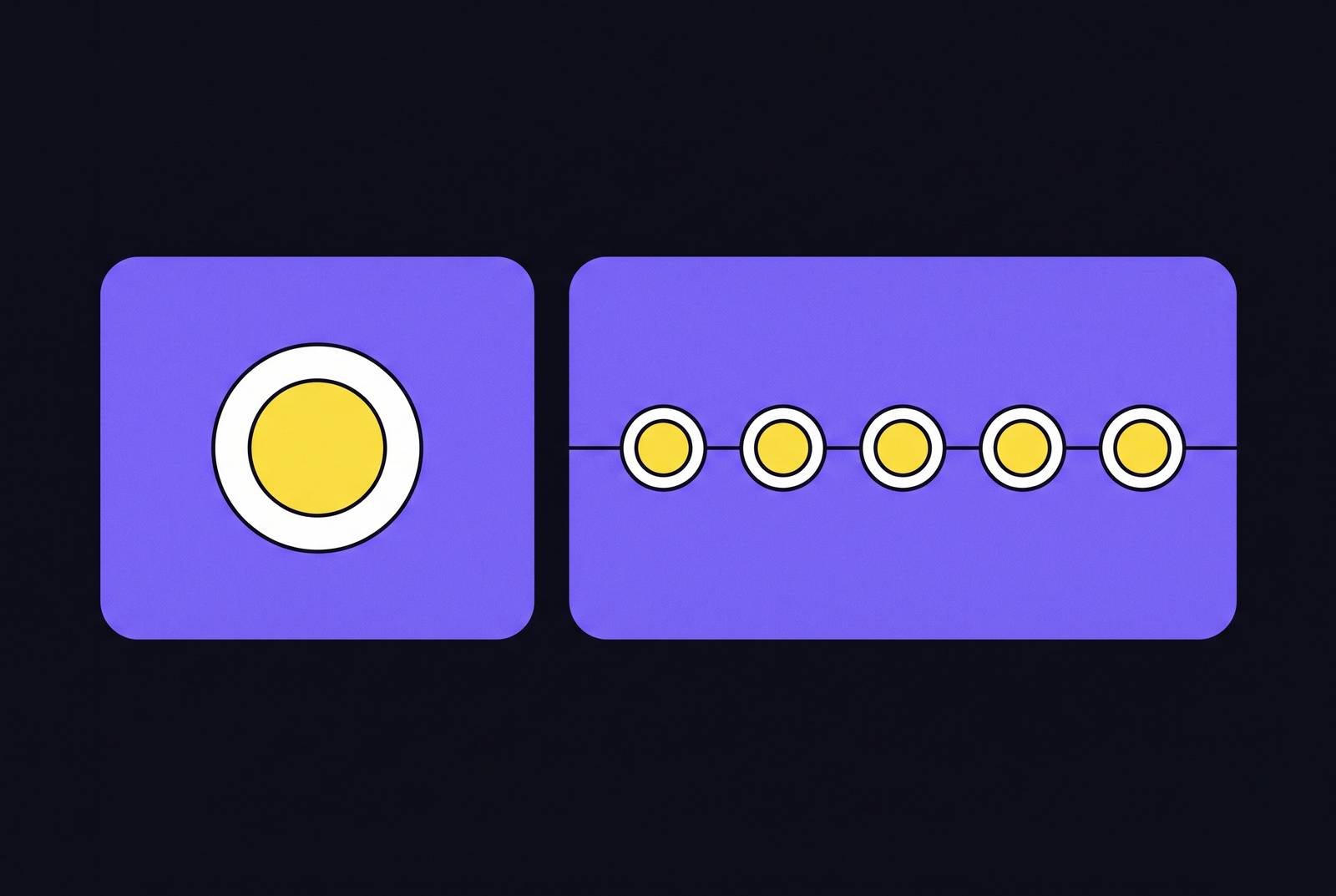
A Type I is a point-in-time assessment. Your auditor looks at your controls on a single date and confirms they're suitably designed to meet the relevant Trust Services Criteria. It's a snapshot. It answers: do you have the right thing in place?
A Type II covers a defined period, typically six to twelve months. The auditor isn't asking whether your controls are designed correctly anymore; they're asking whether those controls actually ran, consistently, across the entire observation window. The evidentiary difference is significant. You're not showing a policy document and a configuration screenshot. You're producing logs, access reviews, ticket histories, and change records spanning months.
This distinction matters because enterprise procurement teams increasingly understand it. Sophisticated buyers know a Type I says you built something. A Type II says it works.
Who Should Start with Type I
Type I makes sense when your controls are new. If you spent the last quarter standing up vendor management, incident response, and access provisioning, running a Type II immediately would be testing the operating effectiveness of processes that have existed for a few weeks. That's a difficult audit to pass and an efficient way to document immaturity on paper your customers will eventually read.
Type I also makes sense when a commercial deadline is driving the decision. If a prospect has your contract on hold pending a SOC 2, a Type I can be completed significantly faster, often within a few months of serious preparation, because you're not waiting out an observation period.
But that's the ceiling on what it does. A Type I unblocks short-term deals. It does not substitute for a Type II in the long run, and the buyers who matter already know the difference.
Who Should Skip Straight to Type II
If your organization has been operating its security controls in a documented, consistent way for at least six months before engaging an auditor, a Type II is the more credible path and not necessarily a longer one. You're not extending your timeline materially; you're formalizing evidence collection for a period that has already happened.
Companies that go directly to Type II also avoid paying for two audits when one would have sufficed. The Type I-to-Type II sequence is often presented as a natural progression, but for organizations with real operational history, it's redundant cost.
One caveat worth naming: if you genuinely aren't sure whether your controls will hold up across a full period, Type I gives you a lower-stakes diagnostic. You surface design gaps before they become evidence of ineffective operation. For teams that haven't been through this before and don't fully know what they don't know yet, that diagnostic function has legitimate value.
Scoping the Audit Itself
The Type I versus Type II question gets most of the attention in these conversations. Scoping decisions get less, and that's backwards, because I've seen organizations make the right type decision and then completely undo it by scoping carelessly.
Your System Description Is the Whole Game
The system description defines the boundaries of what the auditor is actually evaluating. Include too little, and sophisticated buyers will notice the omissions and ask uncomfortable questions. Include too much, and you've committed to defending controls across a surface area you can't realistically manage.
Start with one question: what does your customer actually rely on you to protect? Map your critical infrastructure, data flows, subservice organizations, and personnel touchpoints. Draw the boundary around what's genuinely implicated by your service commitments. Then hold that line when pressure to expand arrives, and it will.
Add Trust Services Criteria for the Right Reasons
Security, the Common Criteria, is required in every SOC 2 audit. Availability, confidentiality, processing integrity, and privacy are additive. Each one you include expands the control requirements your auditor will test against.
Adding criteria to signal comprehensiveness is a mistake I see constantly. Add a criterion because your customers contractually require it, or because your service commitments create explicit obligations in that domain. Availability is relevant if customers depend on uptime guarantees. Confidentiality is relevant if you handle sensitive data with specific contractual protections. Privacy is relevant if you're processing personal information under regulatory expectations.
Every criterion you add is a set of controls you must design, implement, document, and, in a Type II, demonstrate operating across the full window. The cost accumulates faster than most teams anticipate.
Handle Your Subservice Organizations Before Fieldwork Starts
If your product relies on cloud infrastructure providers, payment processors, or any third party performing functions relevant to your Trust Services Criteria, those relationships need to be addressed in scope. You have two options: carve them out, excluding their controls from testing, or use the inclusive method and absorb their controls into your own scope.
Most organizations carve out major infrastructure providers, and that's usually correct, provided you're collecting evidence that shows you've reviewed their compliance documentation and that your vendor management program is actually running. The auditor will still evaluate your oversight of subservice organizations. You just won't be responsible for testing their controls directly.
The Mistakes That Actually Derail First Audits
Scoping too broadly is the most common first-audit error. Organizations pull in every internal system, every team, and every data type in the name of thoroughness. What follows is an audit that runs over timeline, generates a sprawling exceptions list, and produces a report that's harder to defend than a tightly scoped one would have been.
The second most common mistake is selecting a Type II observation period before the controls are genuinely operational. If your access review process started three months before the audit window, you'll have evidence gaps in the early portion of that window. Auditors note them. Buyers read them.
Start conservatively. A clean, well-scoped Type I or a tightly bounded Type II with strong evidence is more valuable than an ambitious scope full of qualifications.
The Sequence That Actually Works
Map your service commitments to your infrastructure and data first. Identify which Trust Services Criteria are genuinely implicated by what you actually do for customers. Engage a qualified auditor early, not to start fieldwork, but to pressure-test your scope before you build your control environment around the wrong boundaries.
If your controls are nascent, formalize them, run them consistently for several months, then initiate the Type II window. If they're already operational, go straight to Type II. The scope you define before fieldwork begins is the decision that determines whether this process is manageable or punishing.