Collecting and Reviewing Vendor SOC 2 Reports at Scale
How to efficiently review hundreds of vendor SOC 2 reports without burning out your team.
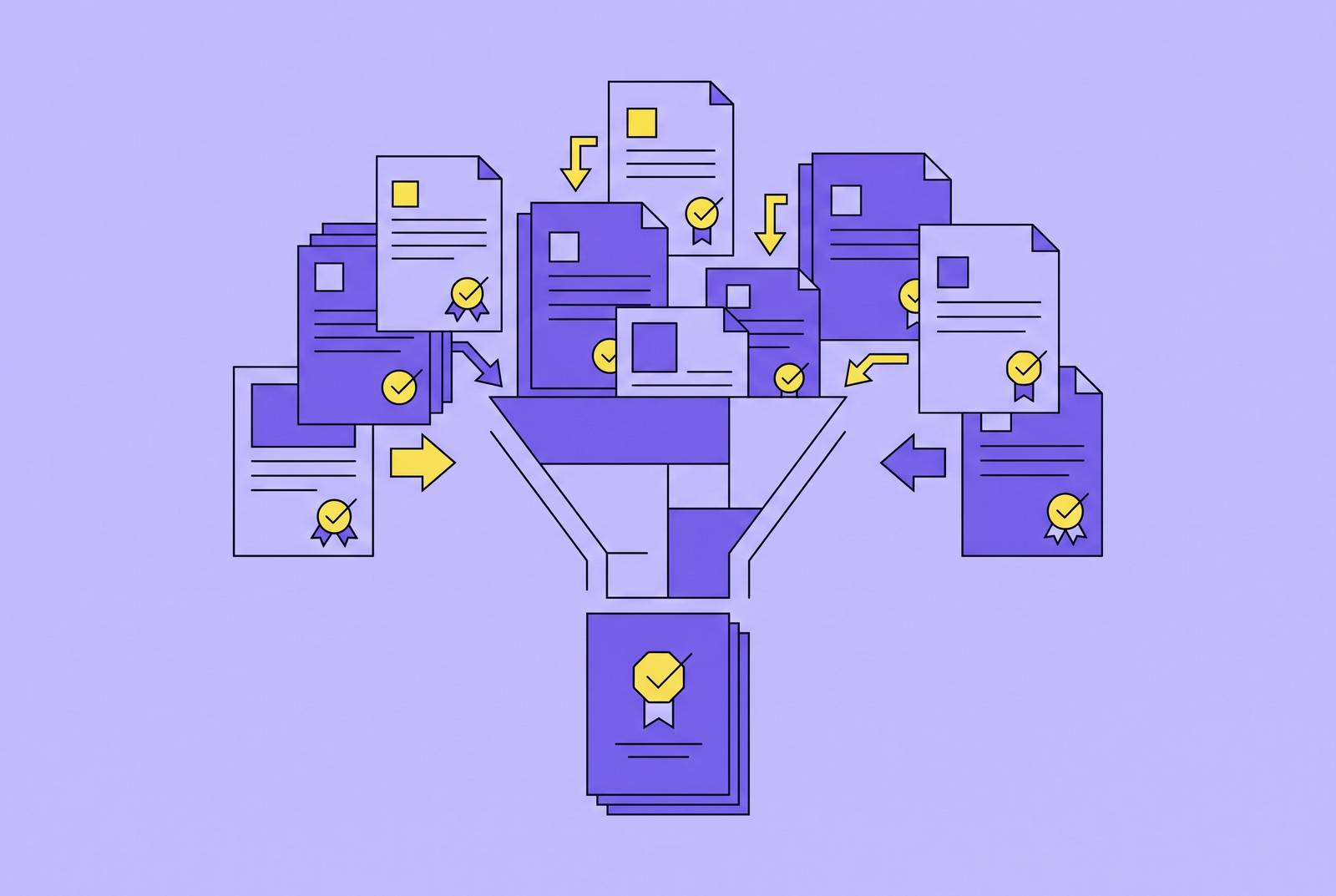
Third-party vendor lists now exceed what standard risk-review routines can reasonably handle. With more SaaS tools and cloud providers connecting to company environments and information, every vendor still needs a separate yearly SOC 2 assessment, increasing the burden with each portfolio addition.
The numbers tell a harsh story. One Type 2 report alone can fill dozens of pages, while the details that genuinely show whether a vendor is risky sit buried in exception tables and footnotes that few readers ever see, because most stop after the opinion letter. Scale that across a vendor base that may number in the dozens or hundreds, and thorough cover-to-cover review of each report stops being feasible, no matter how rigorous the program's oversight. What breaks down is not diligence but capacity: the work outstrips the time to do it well, repeating each year while vendors multiply and every renewal piles on one more report.
Oversight expectations now reflect that shift. Companies are now expected to keep watch over vendors and retain proof that reviews happen regularly, rather than rely on a single onboarding report stored away. When a risk program cannot demonstrate a consistent, organized way to review vendor SOC 2 reports in line with the size of its vendor list, its exposure increases as the portfolio expands. Auditors now see that exposure in assessments, regulators identify it during third-party risk program reviews, and counterparties raise it through tougher diligence questions. This piece moves section by section through the problem of handling SOC 2 collection only during initial diligence, not as ongoing operational work.
SOC 2 Type 2 report contents and reading order
Every SOC 2 Type 2 report has the same predictable five-section layout, but most teams go through the sections in a backward order for finding risk.
A reviewer should begin with Section 1 because that is where the auditor gives its opinion. It classifies the auditor’s conclusion as unqualified, qualified, adverse, or disclaimed. When the opinion is unqualified, the auditor concludes that the vendor’s control design was appropriate and that the controls operated effectively during the review period, although exceptions may still appear in the report. In Section 2, management asserts that the vendor’s leadership is accountable for the described control environment. Use the issue date in this section or Section 1 as the report date, which differs from the audit period end, and assess that interval to decide whether reliance requires a bridge letter. Section 3 is the system description, defining what the report actually covers: if the specific product or service an organization buys from that vendor is not named in this section, the report provides no assurance about it. Section 4, controls, tests, and results, is where compliance gaps appear in practice, and the exceptions column inside it is where a reviewer should go immediately after confirming scope in Section 3. Section 5, other information, holds management's responses to any exceptions found in Section 4. It is not itself audited, but it offers a useful signal about how seriously the vendor treats its own findings.
To surface risk, start with the opinion, move through scope and dates plus the exceptions column, and finish by reviewing CUECs alongside any subservice organizations that were carved out. That sequence reverses how most people typically glance at the opinion before shutting the file.
Whether any of this applies to a given purchase depends on two further distinctions. A Type 1 report assesses the suitability of control design at a specific moment. A Type 2 report tests whether those controls functioned effectively over a set span, typically half a year to a full year, and when assessing vendor risk, this version provides meaningful evidence of how a vendor actually performs. Security is compulsory in every case, while the remaining four may be covered or left out based on the services the vendor provides and the requirements the buyer set when the audit occurred. Scope differs from one vendor to the next, so verifying which criteria the audit examined belongs to the work of reading the report, not something to infer from its cover.
What to request from vendors before the report arrives
The review methodology needs every document up front, since requesting just the report leaves gaps that careful reading can't fix afterward.
Ask first for the latest SOC 2 Type 2 report from the vendor, plus evidence that its audit spans a current uninterrupted period and that the opinion has not gone stale. If the vendor’s audit window closes well ahead of the buyer’s review, request management’s interim coverage letter, often referred to as a gap letter. Vendor management issues it to bridge the time from report release to the end of the buyer’s audit period and to note any material control-environment changes in between. Also specify the Trust Services Criteria included in the engagement; Security by itself offers less assurance than Security combined with Availability or Confidentiality, depending on the product or service at issue. Name every subservice organization supporting the vendor, indicate whether it is excluded from or included in the auditor’s testing, and remember that exclusion leaves the buyer with the resulting assurance gap. Finally, verify that the system description identifies the exact offering the buyer uses; otherwise, even an unqualified opinion does not extend to it.
Treat a report from this process as usable only after checking five elements: when the review took place, which Trust Services Criteria it covers, what system the description addresses, what opinion the auditor issued, and how testing was performed. As a set, the checks tie the report to the specific product or service being evaluated, rather than a different area of the vendor’s operations.
How to triage exceptions: distinguishing material risk from noise
A Section 4 exception in a Type 2 SOC 2 report does not, on its own, warrant alarm. Even reports with unqualified opinions routinely contain exceptions, so the reviewer must decide whether a specific one threatens the way the organization actually relies on the vendor's offering, instead of treating every exception as equally urgent.
Two examples show the distinction. When recently hired employees wrap up security awareness training several weeks after the deadline, the issue stays minor and usually carries little downstream risk across buyer environments, whatever service they happen to be buying. By contrast, an unencrypted data store is a serious exception that creates material risk regardless of which vendor service a buyer uses. The dividing line between minor and serious issues is whether the situation implicates a control bound to the service the buyer is actually purchasing. A server-patching lapse at the hosting provider reaches the buyer in a tangible fashion: the buyer's workloads run on that very same server fleet. A vendor's delayed signoff on the employee behavior code almost certainly doesn't, since it carries no operational link back to the actual service.
In any context, reviewers should rank gaps in removing access and access review issues as higher-risk exceptions, since they often appear in SOC 2 audit findings and can enable credential-based attacks when former employees retain access that opens a path into a breach. Reviewers should automatically handle exceptions in these two control areas before lower-risk items.
When a report is qualified instead of clean, reviewers should do more than simply record that fact. The file should show the follow-through, including outreach to the vendor for an explanation of the corrective action already taken or planned for the exceptions, with the outreach retained in the review record. The unaudited replies from management in Section 5 can help here as well. A vendor’s frank, specific response to an exception, paired with a believable schedule for fixing it, is far more reassuring than stock wording implying the issue drew little real attention.
A SOC 2 report can hide two main risk categories from readers who stop at the opinion letter, and exceptions are one of them. The second is the set of duties the buyer must carry under the report.
How CUECs shift control obligations onto your organization
They're on the buyer to implement, and skipping them voids whatever assurance the report seems to give.
CUECs exist because the problem is built into the setup. Multi-factor authentication may be available through the vendor’s software, but using it is still up to the customer. The vendor may include detailed access permissions by role, but only the customer can remove a departing worker’s account when that person leaves their job. What each CUEC writes down is the auditor’s assumption: the customer will do its part in the control environment. The audit only tests the controls the vendor operates. No one verifies if the purchaser put the CUECs from Section 3's close into practice. The assurance the report offers depends upon controls that were never scrutinized during the audit.
This conditionality reaches past the compliance file. Should a breach or security event occur, an organization that neglected its assigned SOC safeguards will find few options for redress. Even a flawless supplier assessment cannot shield a purchaser who left multi-factor authentication disabled or failed to establish the exit procedures the supplier expected to exist.
CUECs must never be skimmed as an afterthought. The review process has to handle them as their own workstream. Upon spotting a CUEC within a supplier's documentation, the assessor must verify that the purchasing entity currently executes the specified safeguard, log those findings as part of the assessment, and highlight any shortfall needing correction. By the time this is done, evaluating a supplier's SOC 2 report stops being about that supplier. Instead, it turns into a sequential examination of the purchasing organization's own safeguards.
How subservice organization carve-outs extend your vendor's risk perimeter
A SOC 2 report from a vendor can describe the outside firms handling critical workloads, whether storing data, processing it, or verifying user identity, in one of two formats, and whichever format the vendor selects decides how much of the actual risk picture the document truly reveals. Under a carve-out arrangement, the auditor's procedures stop where the vendor's own systems end, and every outside organization the vendor depends on is left completely untested. That risk shifts to the buyer with no inspection performed.
Although the system description identifies the exclusion, any reviewer who stops at the opinion letter will miss it. The key scope test is straightforward: within the specific service the buyer is purchasing, does a particular subservice organization handle the relevant processing of information, operation of infrastructure, or user-identity controls? If it does, that carve-out leaves a meaningful break in assurance, so the buyer should obtain the subservice organization's SOC 2 report itself instead of relying on coverage from the primary vendor.
For this type of vendor arrangement, choosing the inclusive approach gives reviewers much more assurance. Under the inclusive approach, the auditor also tests relevant controls at the subservice organization, addressing the exposure left by a carve-out. A carved-out subservice organization does not always need its own report, so reviewers should focus first on providers whose data or processing role bears most directly on their regulatory or contractual duties, not treat every Section 3 entry as equally urgent.
The Delve fraud of 2026 as a stress test of structural weaknesses in document-based assurance
Delve made clear what the preceding methodology assumes already: a document-based vendor review program may fail silently, and a clean report doesn't confirm the vendor's controls are as reported.
If a supplier's SOC 2 assessment emerged from procedures yielding invented conclusions, the evaluating entity's workflow functioned precisely as intended. The review team took in the report, read through it, saw no exceptions, and logged an unblemished assessment in its records. The risk program logged nothing because its framework offered no means to challenge whether the submitted paperwork was genuine. Each step outlined above, including review sequencing, exception triage, CUEC verification, and checks on subservice exclusions, assumes the paperwork under scrutiny is legitimate. Delve reveals the consequences of leaving that foundational assumption entirely unexamined.
Applying this review approach as a continuous practice, instead of a one-off form to finish and file, is precisely what makes it valuable. While no repeatable framework guarantees catching a fraudulent report, embedding habits such as checking outside signals, requesting bridge letters, examining subservice ties, and tracking qualified opinions generates the very resistance needed against failures like Delve. Such reports remain merely one source among many that any rigorous vendor risk program must rely upon, while firms treating them as their sole input heading into 2026 find themselves reconstructing their vendor review process entirely anew.
Sources
- How to Evaluate a Vendor’s SOC 2 Report When Quality Is in Question
- What is a SOC 2 report? Examples, templates & 2025 guide
- SOC 2 Report Example: A Detailed Section-by-Section Breakdown
- How to Read, Review, and Analyze a SOC 2 Report
- Vendor SOC 2 Reports: 9 Easy Review Steps + Checklist
- SOC 2 Reports in Vendor Risk Assessments: Key Use Cases
- What a SOC 2 Type 2 Report Actually Proves About Your IT Vendor
- CUECs — SOC 2 Definition