Preparing Employees for SOC 2 Auditor Interviews
Auditors verify stated policies match how employees actually work during interviews.
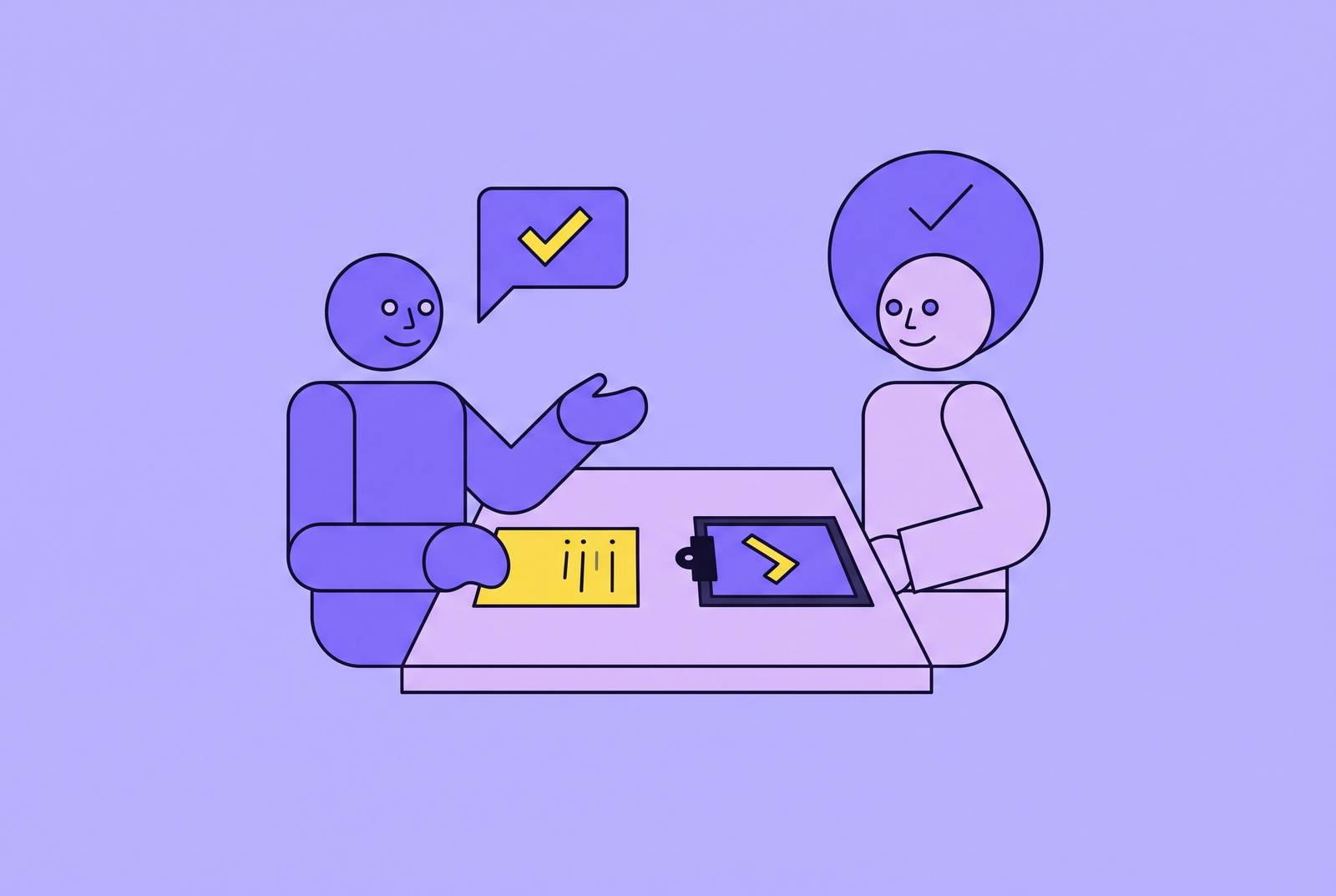
During a SOC 2 audit, an engineer is asked to walk back through a production change made six months earlier, and the account the engineer gives describes a process that doesn't line up with what the policy for managing changes required. That moment recurs across dozens of conversations during several weeks on site, and it is in that recurrence that a SOC 2 audit truly takes place. On paper, a policy may sketch a picture-perfect way of handling access, responding to incidents, or reviewing code prior to shipping. The conversation checks whether that ideal matches the way people really work. An auditor pulling a sample of changes, incident tickets, or access events and asking the responsible person to explain the reasoning is doing no empty ritual. Interviews serve as a verification layer beyond paperwork, exposing where stated policies diverge from actual team behavior since staff must respond to unanticipated prompts. When auditors write Type II reports, they need proof that controls operated through the whole observation period, not just at its outset. One training session held early in the year will not satisfy that bar. Instead, staff must retain the ability to demonstrate their control knowledge on demand long after training ends, making readiness a structural audit requirement and not merely a gesture to calm anxious employees.
How Findings Escalate
If an interview response conflicts with the control record, the auditor follows a measured sequence: noting the issue, broadening the test population to determine its scope, and asking for supporting material to resolve it. But if the inconsistency is confirmed, the process ends with a qualified opinion, whose business implications reach far outside the audit. Corporate buyers use SOC 2 reports for a quick read on how secure a vendor is, avoiding their own extended review. When a report lists exceptions or carries a qualified opinion, it gives procurement the very concern they are meant to raise, with familiar fallout: legal review slows deals, buyers seek risk-based price reductions, and regulated customers, including healthcare organizations, may end the relationship. Every control an auditor checks is run through the Trust Services Criteria, which set out five categories covering Security, Availability, Processing Integrity, and Privacy alongside Confidentiality. Security has to be in every audit, whatever other ones a company adds, and a hit under Security usually brings the widest reputational fallout, since it addresses whether the vendor can keep data safe at all, which is what every buyer wants to know first. Because that escalation path is predictable and repeatable, preparation can be just as orderly, mapped role by role to the issues each function is most likely to encounter.
The questions auditors ask engineering teams and the evidence they expect
In a SOC 2 interview, engineering teams face the most scrutiny because they manage the exact areas examined earliest and hardest: change management, incident response, and access provisioning. When examining change management, reviewers expect technical staff to detail particular code or infrastructure modifications made during the assessment window rather than just verifying that something changed. The auditor needs to see the full approval chain: who reviewed it, who gave approval, and how failures would be reversed. A good answer always comes with an artifact. Dated PR review records, release logs, and change-ticket entries meet the standard; confident talk alone does not. Engineers should have that evidence ready to share immediately, not start looking during the interview. Practicing how to find it in advance is just as important as understanding the process is in place.
Auditors probe who holds production deployment rights and what stops unauthorized entry, expecting engineers to justify both their access levels and the logic that determines their scope. Access reviews collapse when those under review, or the administrators conducting it, cannot explain how least-privilege works in everyday language. Questions on multi-factor authentication and credential handling take the same approach, checking whether teams grasp the control in practice instead of repeating it from a presentation.
When a vulnerability is found, engineers should be able to explain their next steps in a way that follows the approved incident response playbook precisely. A written plan is little help under pressure when the engineer on call cannot find it. Practicing the actual response path in tabletop drills builds readiness that awareness training alone cannot. Have the team rehearse the whole flow in-house, moving control by control with actual evidence artifacts available, so engineers learn to find and show proof instead of just remembering a control exists.
The questions auditors ask HR teams and the termination test they always run
The department surfaces audit issues at a rate that outpaces its team's security knowledge, pointing to flawed process design rather than ignorance. When staff leave, the personnel and technology teams must coordinate, yet these transitions often break down quietly if either group delays its alert. The termination sample ranks among the most standardized steps an auditor takes: they pick a group of terminated employees, requiring HR or IT to supply dated records confirming prompt removal of access. The most common revelation from this review is simple: departing staff kept their login privileges active long after they left. Audits keep surfacing the same underlying problems. HR never alerted IT in time, access removal was left entirely manual, or the termination checklist simply omitted a given system. For HR staff getting ready for this test, being told a checklist exists won't cut it. They must be clear on what the checklist covers, who is responsible for each part of the workflow, and how the time-stamped evidence appears when an auditor requests it.
HR also gets onboarding questions that flip the termination test around. Auditors want to know what access new hires receive, and whether it starts out least-privilege on day one rather than getting widened bit by bit outside any formal process. HR must be able to demonstrate that role-based permissions arrive with the hire itself, never assembled informally later on. Training records also fall under HR's ownership: a structured program's attendance logs, quiz results, and attestation signatures show the security policy lives beyond employee-handbook wording, and HR frequently acts as the official custodian of that evidence. What matters is being able to pinpoint where that evidence sits and pull it quickly when asked. The best preparation is a dry run of the termination sample ahead of fieldwork: choose five pretend offboarded staff, pull the evidence for each, flag any system whose logs carry no timestamps, then fix those weaknesses early enough to count.
The Questions Auditors Ask Leadership and Board-Level Oversight Evidence
Questions posed during leadership interviews differ fundamentally from those in engineering or HR sessions. Instead of evaluating day-to-day mechanics, these sessions probe whether leaders maintain written proof of active supervision over security efforts rather than merely acknowledging a framework is present. Reviewers will request documentation such as committee notes, risk panel records, or prior incident escalation trails to confirm that senior leaders or the board genuinely track the initiative. Simply stating "the board stays informed" verbally fails to meet this requirement; documentation must exist. The most pointed inquiry targets which senior leader holds accountability for security and the exact route a significant threat follows toward resolution after discovery. A leader unable to identify that accountable party or detail how serious risks move toward resolution signals to reviewers that supervision exists only on paper, pushed so far down the chain that those at the top no longer see it.
Leadership must likewise be prepared to address oversight of vendor risk, especially when it comes to AI tools and outside firms that process data, since auditors now view relationships with AI providers as vendor risk matters that require a documented review instead of assuming the provider's published terms of service suffice. Getting leadership ready takes less work than what the drilling engineers or the human resources staff must do. Executives get a briefing session ahead of the audit, where the CISO or the compliance lead walks them through where each in-scope Trust Services Criterion stands today, ensuring that leadership's interview answers line up with the demonstrations engineering and HR each made separately. When leaders and operational staff describe things differently, auditors pick up on that mismatch, and it frequently does more harm than a missing artifact would.
How AI Tool Usage Became a Direct Interview Question in 2026
Auditors no longer take an honor-system approach; instead, they ask employees point-blank which AI tools they rely on while doing their jobs. Auditors verify those answers by reviewing logs, running endpoint-security scans, and sometimes sitting down with employees for interviews during fieldwork. Saying "the team uses a major AI provider" no longer cuts it once auditors start digging in this way. Auditors now expect to hear the specific tool's name, proof of vendor approval, a clear picture of what happens to data after it enters the tool, and documentation that employees were trained on the risks tied to that particular tool. The concrete danger here is simple to visualize: when a developer feeds exported client records into a generative platform for troubleshooting live bugs, that one move establishes an unvetted supplier arrangement bypassing corporate procurement oversight. Auditors have shaped their fieldwork to catch exactly this kind of thing. Their procedures include examining device security records, checking whether IT can detect or has disabled AI browser extensions, and weaving inquiries about generative platforms straight into staff conversations instead of ignoring the subject.
Auditors expect each active AI tool to have an accountable owner, documented vendor vetting prior to deployment, and a signed Data Processing Agreement executed alongside the provider. Relying on a vendor's standard terms of service will not satisfy this requirement, since reviewers insist the contract itself explicitly bar using client information to train their models without an affirmative opt-in. Beyond those documents, reviewers want confirmation that staff completed instruction addressing the particular data risks of each application instead of relying on broad security awareness programs adapted for AI. Unsanctioned AI undermines even the most polished vendor oversight framework whenever staff regularly adopt applications unknown to compliance. The sole effective safeguard is a truthful internal catalog compiled prior to fieldwork, documenting the applications staff genuinely rely on daily instead of merely those with official clearance.
Why Evidence Standards Are Tightening
The AICPA published the Trust Services Criteria in 2017 and revised the points of focus in 2022, and the criteria themselves have not changed since 2017. No new version has been issued since that 2022 revision. What has shifted is not the framework but the way auditors interpret and apply it, especially around AI use, vendor risk, and the standard of evidence they consider acceptable. An employee who says "quarterly access reviews happen here" has to be ready to produce the actual review records on request, not simply confirm that the policy describing them exists. A verbal account of a control, no matter how confidently it is given or how right the details are, does not carry the weight in an interview that it used to. Because of this, every team mentioned earlier must adjust its readiness: engineers need to practice pulling proof, HR should review the termination sample using actual timestamps, and leadership must understand where every Trust Services Criterion stands today. Auditors have stopped expecting staff to simply explain what safeguards exist. Instead, they demand tangible evidence that each safeguard functioned as intended.